Showing posts with label inclusion. Show all posts

Sunday, March 13, 2011

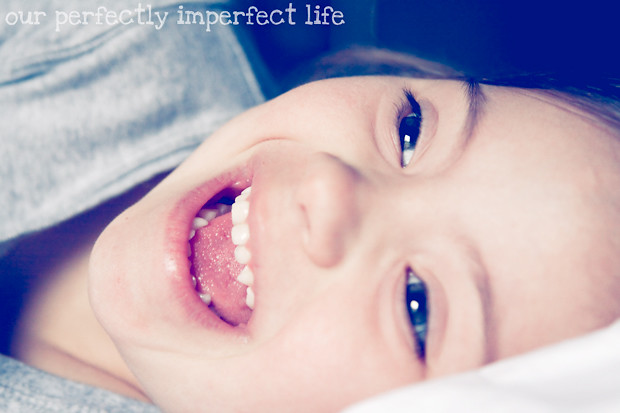
Love that chick.

IMG_2752wm

Payton is by far the pickiest eater in our house... behavioral as it may be. Her speech therapist spends about 15 minutes of each session working with her on eating different textures... and trying to do so without gagging. She has a very sensitive gag reflex... and if she had it her way... her diet would consist of the following...
  • pizza
  • chicken nuggets
  • french fries
  • yogurt
  • chips
She will eat other things like spaghetti, chicken quesadillas, oranges and such... she just prefers not to. And thank goodness she does not make her own meal choices. I swear her eating could easily become a battle... but I try to be patient with her. I cannot imagine that she prefers to gag when eating a variety of foods. Chew, chew, chew is a common phrase at mealtime.

Sigh.

IMG_2758wm

I get on these little kicks where I decide that I will not accommodate her behavioral meal choices anymore... and give her what the rest of the family is having. Because I know she can eat it... she just would rather have chips. And sometimes... when I don't feel like fighting the fight... I do make her a separate meal.

A few nights ago I used my menu planner and made chicken parmesan for dinner... with a side of corn. And I sat there with Payton until she ate every last bite of her chicken and at least a few bites of her corn. She gagged all the way through it and I chanted... chew, chew, chew. Her technique was less than desirable... chewing her chicken at the front of her mouth, likely secretly hoping it would just fall out. I nipped that in the bud... but now I am questioning myself.

Payton woke up in the middle of the night vomiting up her entire dinner. Like... several times. Did she have a bug? If she did, no wonder she didn't want to eat. Or was it her less than desirable chewing and swallowing technique of this food that she had no desire to eat? I am afraid maybe the food never made it completely down her esophagus.

Hopefully it was just a bug.

Even though she seemed to be feeling fine... I kept her home from school and took her in to be swabbed for strep. Negative. Days like that are some of my favorite times spent with my kids. Lazy day around the house... just the one child and I. 

IMG_2769wm

Taking care of them... being a momma. Snuggling in bed for afternoon nap.

IMG_2756wm

Payton... close your eyes and pretend you are sleeping.

IMG_2759wm

Haha... love that chick.

::

I received the identification bracelets I ordered for the girls in the mail the other day. There has been a lot of discussion about what information the bracelets should actually contain.

IMG_2733wm
Bracelets ordered from here.

On a whim after the great Barbie jeep escape... I ordered them with name, address and the cell phone numbers of both Kyle and I. After thinking it through and getting feedback from a few police officer friends... I think I need to order another set of bracelets with just our phone numbers on them.

IMG_2774wm

And while I would love to have the girls wear these bracelets every minute of every day... I am not sure it is really feasible. I am just not sure... I am struggling with this. And the bracelets obviously will only go so far to help if the girls did end up missing... depending on the situation and whether or not they are found by the right person. That said... I am glad to have them for times when we go on vacation or to an amusement park... and other places of the like.

Meanwhile... I spoke with a Deputy Sheriff friend of ours about the Project Lifesaver. Unfortunately... our county has a waiting list due to budget restraints. So... this is not an option for us right now. We could get our own bracelets... but I am still on the fence... and I am not sure why. I don't know... I just want my girls to lead their lives as normal as possible... but at what point does it become too late? I do think... however... that I will be getting this for those times that we need it.

Decisions, decisions.

::

We are knee deep in all things IEP, FAPE, IDEA, ESY, LRE, PLOP*... and so on. We have Payton's kindergarten eligibility meeting in two weeks... and I am anxious, to say the least.

I have consented to the psychological testing for Payton and I am not sure if that was the right thing to do. I am feeling at peace with the decision... right this moment... but in five minutes I could read something that will change my mind. The outcome of this testing will determine her label... she will lose her DD* label... and I am okay with that... as long as it does not affect the services she will receive.

I could go on and on... but I won't since the end result is all that matters and I will update on that once we are there. If you are a parent or teacher or anyone else that is involved in inclusion of a child with Down syndrome... please feel free to join a new group that I created on facebook. We are up to 326 members nationally... well, even internationally... and there is a ton of great information.

IEP = Individualized Education Program
FAPE = Free Appropriate Public Education
IDEA = Individuals with Disabilities Education Act
ESY = Extended School Year
LRE = Least Restrictive Environment
PLOP = Present Level of Performance
DD = Developmentally Delayed

::

Headed to California later this week for the national Juice Plus+ conference... so excited. The conferences are always so inspiring... and they remind me why Juice Plus+ is such an integral part of our health.

We are also having a DS mommas meet up at City Walk while I am there... email me if you want to join us!

Sunday, March 6, 2011

Inclusion and Access to the General Education Curriculum

Being the parent of a child with special needs ... you never stop learning or advocating. I understand that you continue to learn and advocate for any child, but doing so for a child with special needs takes it to another level. It can definitely be exhausting, but you have got to be on top of your game.

I attended a seminar yesterday put on by Ricki Sabia, Associate Director of NDSS National Policy Center. It was very good ... and I am transferring the powerpoint slides here because I know there are lots of mommas (and poppas) out there interested in what she had to say. There is a lot of information ... make sure you take time to get through it all and focus on UDL.

Academic Benefits of Inclusion
  • Students earned higher grades and higher scores on standarized tests.
  • Greater progress in reading and math when compared to students educated in resource setttings.
  • Higher high school completion rates and college attendance.
  • And for students without disabilities: Achievement increased in at least one academic area. In other words, students without disabilities do benefit from having students with disabilities in their classroom.

Social Benefits of Inclusion for students with disabilities
  • Students with disabilities in general education classes had more friends.
  • Teacher ratings showed improved social skills.
  • Students do not demonstrate high levels of loneliness.

Social Benefits of Inclusion for students without disabilities
  • Improved self concept.
  • Reduced fear of human differences.
  • Increased tolerance.
  • Improved social emotional growth.
  • Improved personal conduct.
  • Positive outcomes for high school students who had interaction with students with disabilities.

Behavioral Benefits of Inclusion
  • Higher level of engagement in school activities.
  • Sharp decline in discipline referrals after shift to inclusive practices for students with and without disabilities.

Benefits of Inclusion for post school outcomes
  • Increased employment rate and job skill level.
  • More time in general education programs resulted in better postsecondary outcomes (click here for PSE opportunities for students with ID).

Each state's Department of Education should have an inclusion philosophy laid out for teachers. Ricki Sabia from NDSS recommends printing this off and presenting it in your IEP meeting ... if needed ... to show them (in times of resistance) their own philosophy that they should be adhering to.

Virginia DOE New Teacher PPT
Benefits of Effective Inclusive Practices for teachers
(source)
  • Increases opportunities to develop professional learning communities through growth in knowledge sharing and skill development.
  • Increases confidence in teaching students with diverse academic and social needs.
  • Creates opportunities for better understanding of students with disabilities.
  • Enhances knowledge about effective teaching and learning strategies.
  • Increases level of content knowledge.
  • Promotes understanding of the IEP process, content and implementation.
  • Provides support systems among teachers.
  • Provides opportunities to problem solve with another professional and receive additional support within the classroom.

What is not inclusion?
  • Mainstreaming only for non-academics. In other words, if a child is in a regular classroom for only encore, physical education, recess, lunch ... that is not inclusion.
  • An "inclusion class" without natural proportions of disabled students and peers.
  • A seat in the general ed classroom without supports.
  • Academic inclusion without social inclusion.
  • An island within the room for the student and paraeducator.
Elements of Inclusion: Where Students Learn
  • All students with disabilities are members of their neighborhood school.
  • All students are assigned to age appropriate grades in heterogeneous classrooms.
  • Student grouping are based on the individual interests and skills of all students, and not on disability labels.

Supports Students Receive
  • Related services (i.e. speech therapy) are delivered in regular classroom settings and other school environments, when appropriate.
  • Supports and services are provided in the classroom and coordinated with ongoing instruction.
  • The provision of supports for students (instructional, curricular, behavioral, etc) is viewed as a school wide need.

Instructional Planning and Implementation
  • Effective teaching strategies and differentiated instruction are used to meet the needs of every child.
  • The general education instruction and curriculum is used as the base for accommodations and modifications to meet IEP goals.
  • The instructional materials used for typical students are modified for assignments, homework and tests.
*Ricki Sabia from NDSS discussed setting broad academic goals in the IEP and then list under the "support" section that the child will get a list of modified curricular goals. The teacher must then set modified goals within the classroom for each academic area ... and these goals are what the child would work on, be tested on and be graded on.

Social Relationships
  • Planned and structured activities are in place to promote social inclusion and friendship development.
  • Students without disabilities are supported in welcoming students who have disabilities.
*Ricki Sabia from NDSS discussed the importance of putting a social network into place for your child. Enrolling them in extracurricular activities (i.e. dance, tball, cub scouts), encouraging them to manage sport teams if not at a skill level to play, etc. Facilitating this type of social interaction will be key in the acceptance of your child by his/her peers. 

Ricki talked about her son and how hard they worked to put these social relationships into place ... and was mainstreamed and happy. She also talked about a friend's child who was also mainstreamed, yet this boy did not have the social connections in place. He begged his parents to not mainstream him and to let him stay in the special education classroom, because he was not accepted by his peers in the student body. Just really makes you think about just how important the social relationships are in your child's education.

Staff Actions
  • Collaboration between classroom teachers and special educator to implement IEP objectives in general ed lessons.
  • Modifications/accommodations discussed by both general and special ed teachers.
  • Supports planned to enable meaningful participation.
  • School administrator(s) provide a vision and leadership and welcome all students into their school.

Who is included?
*LRE (Least restrictive environment): Congress states a strong preference for regular class.
  • To the maximum extent appropriate, districts must ensure that children with disabilities are educated with children who are not disabled.
  • Removal from the regular educational environment occurs only if the nature of severity of the disability is such that education in regular classes* with the use of supplementary aids and services cannot be achieved satisfactorily. This is important.
  • The need for curricular modifications is not a reason to remove child from age appropriate regular classrooms. In other words, saying that a child cannot keep up with what his/her peers are learning in a regular classroom is not a reason to remove the child from the classroom. The curriculum must be modified and appropriate goals set ... within the classroom.
*Regular classes is not defined under federal law.

Hartmann 4th Circuit LRE Test (1997)
"Mainstreaming" is not required when ...
  • A student with a disability would not receive educational benefit.
  • Any marginal benefit from mainstreaming is significantly outweighed by benefits which feasibly can only be obtained in a separate setting.
  • The student is a disruptive force in the classroom. This is exactly why behavior is so important in having your child mainstreamed. Start early in trying to teach your child what it means to sit and complete a task, as directed. One of the biggest problems parents have is in a regular classroom is when their child will not go with the flow of the classroom (i.e. sit in their seat, sit in circle time, etc).

Where are they included?
The child's placement ...
  • is determined at least annually.
  • is based on the child's IEP.
  • is as close as possible to the child's home.
*Unless the IEP of a child with a disability requires some other arrangement, the child is educated in the school that he or she would attend if not disabled.

When are they included?
In addition to being included in the classroom ...
  • Districts must ensure that each child with a disability participates with children who are not disabled in non-academic and extracurricular services and activities to the maximum extent appropriate to the needs of that child.
  • Supplementary aides and services must be provided if needed to participate (i.e. peer support). I think this is important and is likely something we will need to advocate for.

How are they meaningfully included?
  • Social inclusion
  • Appropriate supplementary aides and services
  • Differentiated instruction
  • Modifications, accommodations and adaptations
  • Universal Design for Learning

 Social Inclusion Tips
  • Start inclusion as early as possible in the grade the child will stay in.
  • Staff training and IEP goal for social inclusion.
  • Disability awareness for students.
  • Info for classmates parents.
  • A few transitional friends in class every year.
  • Full participation in class, school activities and community activities.

Differentiated Instruction
  • Tiered products/demonstrations (different levels of difficulty built-in).
  • Varied modes of expression/demonstration.
  • Group projects.
  • Graduated rubics (levels of expectations).
  • Multiple intelligences.
  • Independent study.
  • Contracts/negotiated criteria.

Accommodations
  • Changes how a student gets information and demonstrates learning.
  • Does not fundamentally change instructional level, content (standards) or performance criteria.
*Example: Less info on a page, calculator (if basic math is not being assessed).

Universal Design
Consider the needs of the broadest possible range of users from the beginning. ~Architect, Ron Mace
(materials here and here)

*Universal Design originated in architecture. An easy way to explain it is this ... when an architect designs a building, they design it to accommodate every person that may use it ... those on foot, those in a wheelchair, etc. The same premise should be used in the classroom.

Universal Design for Learning (UDL)

(click here for more)
  • Design curriculum, materials, teaching methods and assessments to be accessible for all students (disabled and non-disabled, included or not).
  • Provide multiple and flexible means for acquiring and expressing knowledge and engagement.
  • Requires less adaptations, modifications and accommodations - less being "different".

UDL for Curriculum and Instructional Objectives
Goal: To provide optimal challenge for all students.
  • Describe objectives in ways that students can understand them.
  • Set objectives that every student can reach with appropriate tools and alternative paths to success.
  • Set objectives that motivate students to learn (i.e. breakdown long term goals nto reachable objectives/benchmarks for all students).

UDL for Instructional Materials
Goal: To ensure equal access for all students.
  • Provide a range of formats and media at different levels of complexity.
  • Provide different materials for students to express what they know.
  • Provide materials that keep students engaged.
  • If possible, use customizable media and materials.

UDL for Teaching Methods
Goal: To provide effective instruction for all students.
  • Provide multiple examples.
  • Highlight critical features.
  • Provide multiple media and formats.
  • Explain background/context.
  • Provide positive behavioral supports.

UDL for Assessments
Goal: To accurately measure progress for all students.
  • Assessments should adjust to many individual differences.
  • Assessments should focus the questions on exactly what teachers, districts and states are trying to find out (i.e. knowledge, skill or emotional development).

UDL Through the IEP: Goals and Materials
  • Selection of curriculum goals and objectives per marking period.
  • Homework and projects aligned to selected objectives.
  • Alternate formats of textbooks, novels and supplemental materials to support instructional units.
  • Use of computer for written assignments and for accessing digital text and other software.
  • Preview of instructional materials.

UDL Through the IEP: Teaching Methods and Assessments
  • Class discussion questions in yes/no or multiple choice format.
  • Teacher training on technology used by the child.
  • Teacher made assessments based on curriculum objectives, which are designed to eliminate barriers caused by the disability.
  • Digital assessments.

UDL Task Force (federal level)
  • Spearheaded by NDSS in 2006.
  • Coalition of 41 national groups representing general education, special education and higher education interests.
  • Promotes UDL in Federal policy and legislation and disseminates information on UDL.

Maryland Bill Template
(click here)
  • Provides a narrative of steps taken by the Maryland Down syndrome Advocacy Coalition as its members worked on passing a UDL bill.
  • Gives examples of hurdles and process faced in any legislative advocacy.
  • Provides specific information and documents that can be used by other affiliates to move UDL forward in their state.

Key Steps in Template
  • Develop a one page summary about UDL and why it is important.
  • Get the word out through a website, listservs, brochure, webinars, etc.
  • Form a statewide stakeholder coalition representing special, general and higher education interests.
  • Enlist help of your state department of education.
  • Find a legislative champion - work on drafting bill.
  • Educate legislators and get co-sponsors.
  • Ask for local school board support.
  • Testing at hearings.
  • Compromise.

Resources